

Heat-Blocking Blackout Curtains for Bangladeshi Summers
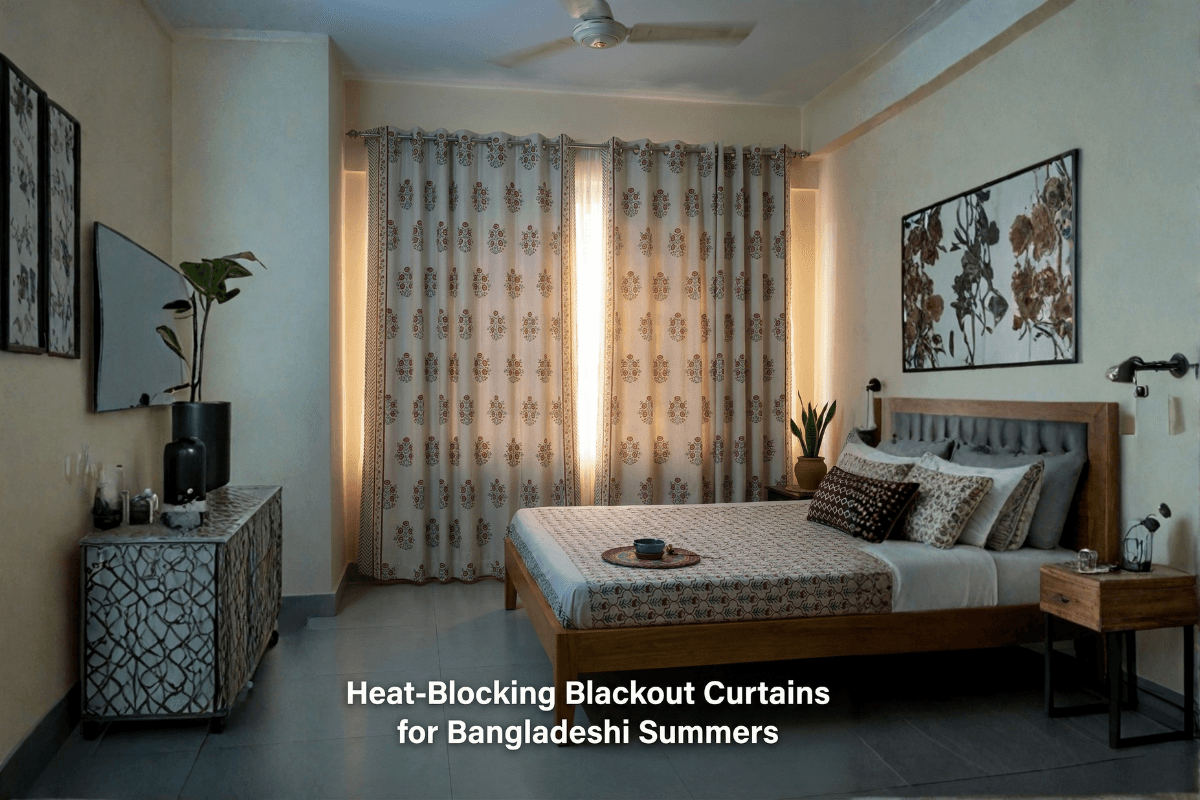
Blackout curtains with thermal lining can reduce indoor temperatures by up to 7 degrees Celsius during Bangladesh's intense summer heat. They block up to 99% of sunlight, protect against UV radiation, and work best when paired with sheer curtains in a double-layer setup. For maximum cooling in Dhaka apartments, choose light-colored outer linings, install curtains 6 to 10 inches beyond window edges, and use pure cotton or cotton-blend fabrics for natural breathability. This guide covers the science, selection, sizing, layering, DIY options, and maintenance of thermal blackout curtains for Bangladeshi homes.
Bangladesh's summer temperatures regularly climb past 38 degrees Celsius, turning standard windows into heat traps. A quality blackout curtain with a thermal lining layer stops UV rays at the glass surface before they convert to radiant heat inside the room. The lining acts as a reflective and absorptive barrier, bouncing solar radiation back into the sky while its dense weave prevents warm air from conducting through the fabric into your living space.
How Thermal Insulation Lining Stops Sun Heat
Thermal lining in a blackout curtain works through reflection, absorption, and conduction resistance.
The outer surface of a thermal lining is typically woven with tightly packed fibers or coated with an acrylic foam layer that reflects solar radiation before it enters the room.
Studies on window insulation show that a properly installed thermal curtain can reduce solar heat gain through a window by 33% to 50%, depending on fabric weight and installation method.
Reflection: Light-colored or metallic-coated linings bounce shortwave solar radiation outward.
Absorption: Dense fabric layers absorb residual infrared heat before it radiates into the room.
Conduction resistance: Multiple fabric layers trap air pockets, slowing the transfer of heat from hot glass surfaces into indoor air.
When sunlight is fully blocked, the indoor temperature remains closer to the thermostat or fan baseline because the primary heat source (direct solar radiation) is eliminated at the entry point.
It is the core science behind why thermal curtains in Dhaka outperform standard window films or blinds in reducing radiant heat load.
The Cooling Properties of Pure Cotton Fabric
Pure cotton fabric used in blackout curtains contributes to room cooling through its fiber structure and moisture behavior.
Hollow Core Fiber Structure: Cotton features hollow core fibers that allow air to circulate through the weave rather than trapping heat in static pockets.
Microscopic Air Flow: Weaves with thread counts between 200 and 400 block light effectively while still allowing air to move along the fabric surface.
Moisture Absorption: Cotton can absorb up to 27% of its weight in moisture, a vital feature given Bangladesh's high humidity.
Evaporative Cooling Effect: As the fabric absorbs and slowly releases moisture, it creates a mild cooling sensation along the surface of the curtain.
Thermal Lavishness: Unlike polyester or nylon, which trap heat at the surface, cotton allows thermal energy to dissipate naturally.
Handloom Thermal Lining: Using handloom cotton with thermal linings provides a balance of natural airflow and superior light blocking for summer.
How to Reduce Room Temperature with Strategic Curtain Selection
Reducing room temperature with blackout curtains depends on fabric weight, lining type, and color. The right combination can lower room temperature by 5 to 7 degrees Celsius without air conditioning, which is meaningful in Bangladesh, where electricity costs remain a concern for many households.
Key Selection Criteria:
Fabric weight: Choose curtains with a weight of 200 GSM (grams per square meter) or higher. Heavier fabric blocks more light and provides better insulation. Thick bedroom curtains in the 250-350 GSM range are the standard for effective heat blocking.
Lining type: Triple-weave or foam-backed linings outperform single-layer options. Look for acrylic-coated or brushed-back linings for maximum thermal resistance.
Color: Choose light shades (white, cream, pale grey) on the outdoor-facing side and darker tones on the interior side for aesthetic flexibility without sacrificing solar reflection.
Fit: Curtains that are too narrow let sunlight leak around the edges, defeating their purpose. Always measure 6 to 10 inches beyond each side of the window frame.
For those looking at curtain prices in Bangladesh, investing in a properly weighted fabric pays off by reducing cooling costs in a single summer season.
Blackout Curtains versus Regular Sheer Curtains: Which One Works for the 40-Degree Heat?
Blackout curtains outperform sheer curtains by a wide margin at blocking heat during Bangladesh's peak summer temperatures.
Sheer curtains filter light softly but block almost no solar radiation, allowing up to 80% of incoming heat to pass through.
At an outdoor temperature of 40 degrees Celsius, a sheer curtain provides negligible protection against radiant heat gain.
Sheer curtains in Bangladesh serve best as a complement to blackout layers, not a substitute. They allow diffused natural light during cooler parts of the day while the blackout layer handles the heat load during peak afternoon hours (12 PM to 4 PM), when solar intensity is highest in Dhaka.
The Double-Layer Setup for Modern Apartments
The most effective window treatment for Bangladeshi apartments is the double-layer curtain system. A Sheer curtain closest to the window and a blackout curtain as the outer layer.
The setup lets residents adjust light and privacy independently while maximizing heat control. The sheer layer diffuses harsh morning sunlight, while the blackout layer seals the window completely during peak afternoon heat.
How to Set Up the Double Layer
Install a double curtain rod or two separate rods, one mounted 3 to 5 inches in front of the other.
Hang the sheer curtain on the inner rod, closest to the glass surface, to catch and diffuse early light.
Hang the blackout curtain on the outer rod so it can be drawn completely to seal the window.
During cooler evenings, draw only the sheer to maintain privacy while allowing breeze flow.
Combining sheer and blackout curtains in apartments also provides acoustic benefits. The layered fabric absorbs street noise, which is a significant quality-of-life benefit in dense urban areas like Dhaka, Chittagong, and Sylhet.
The Physics of Color: Why Light-Colored Outer Linings are a Must
Color determines how much solar radiation a blackout curtain reflects versus absorbs.
White and off-white outer surfaces reflect approximately 80% of incoming solar radiation, while dark colors like navy or charcoal absorb up to 95% of it and re-radiate that energy as heat into the room.
It is why heat-blocking window blinds and curtains with dark outer faces perform poorly as solar barriers despite their opacity.
The solar reflectance index (SRI) shows that light-colored fabrics score between 70 and 90, while dark fabrics score below 25.
In Bangladeshi summers, when solar intensity peaks between June and September, choosing a white or cream outer lining for your blackout curtain is a functional necessity, not just an aesthetic preference.
The inner face of the curtain can be any color you prefer for interior design purposes, since it faces away from the sun. This two-tone approach gives homeowners the freedom to design their interiors without sacrificing thermal performance.
Measuring Your Windows for Maximum Insulation
Improper sizing is the most common reason blackout curtains underperform in Bangladeshi homes.
Light gaps at the sides, top, or bottom of a curtain allow direct sunlight and hot air to enter even when the curtain appears closed.
The window curtain size guide below reflects standard measurements for common room types in Dhaka apartments.
The standard curtain length for living rooms in Dhaka is 90 to 108 inches (approximately 228 to 274 cm), reaching from the rod to the floor with a slight break.
For bedrooms, floor-length curtains that pool slightly create a better thermal seal. Always add 6 to 8 inches to your window width measurement on each side when calculating curtain width, and mount the rod 4 to 6 inches above the window frame to visually raise the ceiling and maximize light blocking at the top edge.
DIY Insulation: Layering Handloom Cotton with Sheer Nets
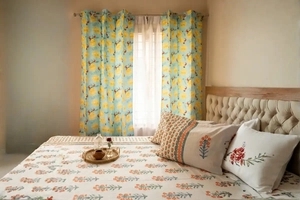
A cost-effective approach to creating heat-blocking window treatments in Bangladesh is to layer locally sourced handloom cotton with a lightweight sheer net. The DIY method achieves results close to commercial thermal curtains in Dhaka at a significantly lower cost, and it celebrates Bangladesh's textile heritage in the process.
DIY Layering Method
Step 1: Source handloom cotton fabric in a light color (white, ecru, or pale yellow) with a thread count of at least 180. Local handloom markets in Mirpur, Narsingdi, or Rajshahi offer quality options.
Step 2: Back the cotton with a layer of white muslin or cotton batting using fabric glue or simple hand stitching. This creates a basic thermal barrier without specialized materials.
Step 3: Hang a sheer net panel on a separate inner rod to act as a light diffuser and provide daytime privacy.
Step 4: Ensure the handloom panel extends at least 6 inches beyond the window frame on all sides to eliminate light gaps.
The approach works especially well for renters who cannot install permanent window treatments. The handloom panel can be folded and stored easily, and the sheer net layer costs significantly less than commercial blackout fabrics while still serving its diffusion purpose.
Maintenance for Longevity: Protecting Fabric from Intense UV Exposure
Intense UV exposure degrades curtain fabric faster in Bangladesh than in temperate climates. A blackout curtain exposed to direct sunlight for 6 to 8 hours daily during summer can show fiber breakdown within 18 to 24 months if not properly maintained. Following a structured care routine extends the functional life of your curtains by 3 to 5 years.
Rotate seasonally: Swap heavy thermal blackout panels in during summer (April to September) and replace with lighter options in winter to reduce UV stress on the fabric.
Wash gently: Machine-wash thermal-lined curtains on a cold, delicate cycle with mild detergent. Avoid hot water, which breaks down acrylic foam linings and causes shrinkage in cotton fabrics.
Air-dry only: Never tumble-dry blackout curtains with thermal linings. The heat damages the backing layer, causing the lining to separate from the face fabric.
Spot-clean UV-damaged areas: The areas closest to the window edge fade fastest. Spot clean with a diluted white vinegar solution to remove yellowing without weakening the fiber structure
Iron on low: If ironing is needed, use a low heat setting with a pressing cloth between the iron and the curtain lining to prevent melting or glossing.
Where to Shop Heat-Blocking Curtains in Bangladesh
Choosing the right blackout curtain for Bangladesh's climate means prioritizing thermal lining quality, fabric weight, and accurate sizing over price alone.
Brands that combine handloom cotton with modern thermal backing offer the best of both worlds: local craft quality with functional heat-blocking performance.
Whether you are furnishing a new apartment in Gulshan or updating a bedroom in Chittagong, the investment in quality heat-blocking window blinds and curtains pays back through lower cooling costs, better sleep quality, and a more comfortable living space every summer.
Purchase from the best curtain shop in Bangladesh, including thermal options crafted specifically for the Bangladeshi climate.
Happy shopping!
Frequently Asked Questions on Heat-Blocking Blackout Curtains for Bangladeshi Summers
Do blackout curtains help keep the room cool?
Yes. Blackout curtains with thermal lining block solar heat gain and can lower room temperature by up to 7 degrees Celsius.
What color curtains block the most heat?
White or cream outer-facing curtains reflect up to 80% of solar radiation and are the most effective at blocking heat.
How wide should a curtain be compared to the window?
Your curtain should be 1.5 to 2.5 times the width of the window and extend 6 to 10 inches beyond each side of the window frame.
Are sheer curtains good for privacy at night?
No. Sheer curtains offer no privacy at night when interior lights are on. Pair them with blackout panels for full privacy coverage.
How do you wash thermal-lined curtains without damaging them?
Use a cold, gentle machine-wash cycle with mild detergent, and always air-dry. Avoid hot water and tumble drying to protect the thermal lining.