

The Complete Guide to Drawing Room Decoration in Bangladesh
Your drawing room is the first thing people notice, but most homes in Bangladesh struggle to get it right.
The challenges of limited space, rising furniture costs, and a mix of modern and traditional styles make drawing room decoration harder than it looks, especially in Dhaka apartments.
The good news is! You don’t need a big budget or a large space to fix it.
This complete guide is designed to change that. Whether you live in a compact flat in Mirpur, a mid-rise in Bashundhara, or a traditional home in Old Dhaka, you will find practical, culturally rooted, and aesthetically rich decoration ideas tailored specifically for life in Bangladesh.
Let’s break down what works and what doesn’t so you can design a drawing room that truly fits your home.
Core Drawing Room Decoration Ideas for Dhaka Apartments
Decorating a Dhaka apartment means working with real constraints compact rooms, low ceilings, limited natural light, and furniture that often has to work harder than it looks.
The single most important principle for drawing room decoration in a Bangladesh apartment: define your focal point first, then build outward. In most Dhaka drawing rooms, this is either the main entrance-facing wall or the television wall. Every furniture arrangement, every decoration choice, should anchor itself to that point.
Colour selection comes next. Light, warm tones soft whites, warm cream, pale sage reflect natural light and visually push walls outward. If you want bold colour, use it on one accent wall only.
Four coloured walls in a compact room feel like a closed box.
Resist the instinct to push all furniture against the walls. Float your sofa slightly inward, anchor it with a rug, and you have instantly created a room that feels intentional not like a waiting area.
Maximizing Space with Small Drawing Room Decoration Tricks
When space is limited, every decision shows!
Most people try to fix a small room by adding more storage or squeezing in extra furniture but that usually makes things worse. The smarter approach to small drawing room decoration is to create the feeling of space, not just manage it.
Small drawing room decoration is where creativity matters most.
Here are the tricks that actually work in Bangladeshi apartments:
Go vertical: Wall-mounted shelves and tall storage units draw the eye upward, creating the illusion of height without consuming floor space. A narrow bookshelf beside the sofa can hold books, small plants, and decor all without a separate side table.
Choose furniture that multitasks: An ottoman that doubles as a coffee table and storage, nesting tables that tuck away after guests leave in a small drawing room, every piece must justify its square footage.
Use one large mirror strategically: A large framed mirror on the wall opposite a window doubles the depth of the room and bounces natural light into darker corners. This is one of the oldest living room decoration ideas for small spaces because it genuinely works.
Let the rug do the zoning: Even in a single open space, a rug placed beneath the sofa and chairs creates a visual boundary that defines the seating area. It tricks the eye into reading separate zones, making the room feel larger and more structured.
Keep curtains light and long. Sheer or semi-sheer curtains hung close to the ceiling not the window frame, filter natural light beautifully and make ceilings appear taller. Heavy curtains absorb light and visually shrink the space.
Essential Living Room Decoration Items for a Modern Home
"Modern" in the context of a Bangladeshi home does not mean cold and minimalist. It means smart, purposeful, and beautifully balanced between contemporary design and local craftsmanship.
These are the items that make the biggest difference:
A sofa with a solid frame. This is your single highest-impact purchase. Shegun (teak) frame construction remains the gold standard in Bangladesh for durability and resistance to humidity. Choose neutral upholstery, warm gray, off-white, or linen beige for the most styling flexibility over time.
A cane or wooden center table: Cane and rattan breathe well in Bangladesh's humid climate and resist the warping that affects cheaper pressed-wood options. They also carry a natural aesthetic that works beautifully with Bengali-inspired decor.
Indoor plants: Money plants, snake plants, peace lilies, and anthuriums thrive in Bangladesh's humid climate with minimal care. A few well-placed plants do more for a room's warmth and freshness than most decorative items combined.
Statement lighting: With voltage stabilizers now widely affordable, decorative lighting is accessible to most homeowners. A single pendant light or a floor lamp beside the sofa completely shifts the ambiance of a drawing room particularly in the evenings.
Curtains hung from ceiling height: Even if your windows sit at a standard height, hanging curtains from just below the ceiling creates the impression of taller walls.
This simple trick transforms how the room feels!
Anchoring the Space with Handwoven Jute Rugs
If there is one item that belongs in almost every Bangladeshi drawing room, it is a handwoven jute rug.
Bangladesh produces some of the world's finest raw jute and local artisans have transformed this material into floor coverings that are gaining serious international recognition.
The case for handwoven jute rugs in a Bangladeshi drawing room is straightforward:
They are breathable, durable, allergy-friendly, and naturally suited to our warm and humid climate. Unlike synthetic alternatives, jute does not trap heat or harbour moisture which makes it particularly valuable during the long summer months.
From a design standpoint, jute rugs are remarkably versatile. Their warm golden-brown tones complement virtually every colour palette from crisp white and grey modern interiors to rich, jewel-toned traditional Bengali styling.
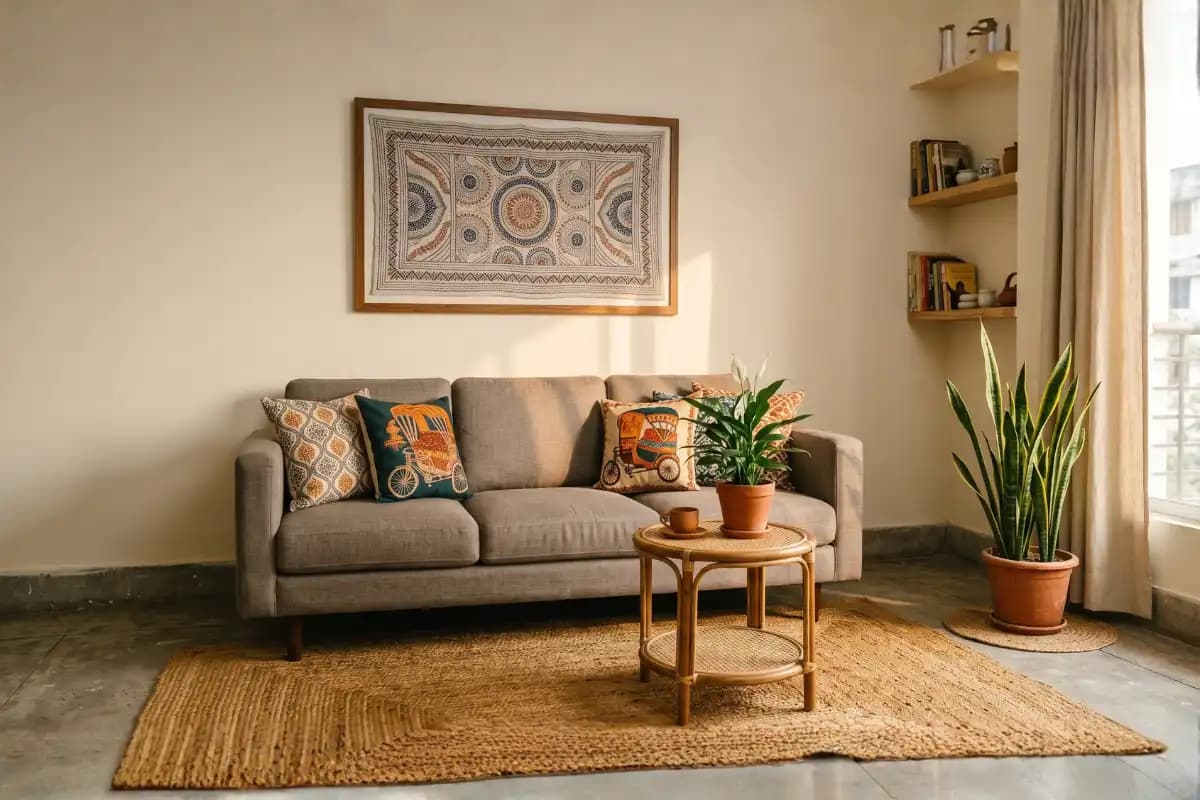
Sizing matters enormously For a more layered, contemporary look, place a smaller coloured dhurrie or woven rug on top of the jute base. This rug-layering technique is trending globally and works exceptionally well. Here is something most people overlook: cushion covers are the fastest and most affordable way to completely change the personality of a drawing room. In Bangladesh, they are also an opportunity to bring genuine craft heritage into the home. Mughal and Rickshaw art cushion covers are a particularly compelling choice rickshaw art brings the vivid, narrative folk tradition of Bangladesh's iconic street culture into the intimacy of the home, while Mughal-inspired geometric and floral embroidery carries a sense of historical richness that elevates even a simple sofa arrangement. For a cohesive look, work with two to three complementary colours. Mix solid and patterned covers. Use different sizes standard square cushions alongside rectangular lumbar cushions to add depth and visual layering along the sofa. Wooden stools are another underestimated essential. A pair of compact wooden stools beside the main sofa can serve as side tables, additional seating when guests arrive, or decorative elements when not in use. Locally crafted stools with turned legs and hand-carved detailing add tremendous character to a modern drawing room. Traditional Bengali living room decoration ideas are not a niche trend they are a return to something that was always there, waiting to be rediscovered. There is a quiet but growing movement among Bangladeshi homeowners particularly younger urban professionals to reclaim their cultural heritage through interior design. Start with natural materials as your foundation: Jute rugs, cane furniture, shegun wood, terracotta planters, cotton and muslin soft furnishings these materials are not only culturally resonant but climatically sensible. Use a warm, earth-toned base palette: The traditional Bengali colour vocabulary saffron, terracotta, mustard, indigo, forest green is bold and rich. In a modern drawing room, these colours work best as accents against a neutral backdrop. A cream or warm white wall allows a saffron cushion or a deep green curtain to command attention without overwhelming the room. Prioritize handmade over mass-produced: A nakshi kantha panel framed behind glass, a hand-thrown terracotta planter, a woven basket used as storage every handmade element brings warmth and human presence that no factory product can replicate. This is one of the core principles of traditional Bengali room decoration. A bare wall is the single biggest missed opportunity in most Bangladeshi drawing rooms. Two art traditions stand out as particularly powerful for room decoration wall displays. The Mughal artistic traditionintricate geometric patterns, stylized floral motifs, jewel-toned palettes has shaped the visual culture of Bengal for centuries. Framed Mughal miniature prints or embroidered panels inspired by Mughal textiles translate beautifully onto a drawing room wall. For maximum impact, create a gallery arrangement of three to five prints in matching dark wood or antique brass frames. Keep surrounding decor restrained so the art breathes. Rickshaw art is Bangladesh's most distinctly contemporary folk art tradition bold outlines, flat vivid colour, floral borders, narrative scenes. A single large-scale rickshaw art panel as the drawing room's focal wall is a genuinely breathtaking decorating choice. For a more gallery-style approach, a curated grid of smaller panels creates a modern effect that feels both globally current and deeply Bangladeshi. Whichever tradition you choose, invest in quality framing. Position wall art at approximately 145 to 150 centimetres (cm) from the floor to the centre of the artwork this is the standard eye-level position that makes gallery walls feel intentional rather than random. Any honest guide to drawing room decoration in Bangladesh has to address the summer because it runs from March to October and it affects every single decorating decision you make. Choose breathable materials: Polyester sofas, synthetic rugs, and foam-heavy cushions trap heat. Natural materials breathe cotton, linen, jute, cane, and rattan allow air to circulate, keeping the room cooler and more comfortable through the peak heat months. Maximise natural ventilation: If your drawing room has cross-ventilation potential, do not block it with furniture. Keep pathways between windows clear. Use sheer curtains that move with the breeze they add visual life and keep air flowing rather than pooling. Swap your soft furnishings seasonally: This is a simple, low-cost trick with a genuine impact. Replace warm-toned or heavy-fabric cushion covers with light cotton or muslin alternatives in cooler blues, greens, and whites during summer. Protect your furniture from humidity: High humidity warps wood, grows mildew on fabric, and degrades upholstery adhesives. Use silica gel packs inside wooden furniture, ensure airflow around all large pieces, and treat fabric upholstery with a fabric protector spray. Use plants as natural coolers: Beyond aesthetics, peace lilies, snake plants, and aloe vera contribute to air purification and mild humidity regulation. Placed near windows with indirect light, they improve both the look and the ambient comfort of the room. Even the most well-intentioned drawing room decoration can go wrong. And in Bangladesh, where apartment sizes are compact and budgets often tight, a single mistake can throw off the entire space. Here are the most common ones and how to avoid them. 1. Buying furniture before measuring the room This is the number one mistake in Dhaka apartments. A sofa that looks perfectly sized in a showroom can swallow an entire drawing room once it is inside. Always measure your floor space first, mark it out with tape if needed, and only then shop. A slim three-seater almost always serves a compact room better than a bulky L-shaped set. 2. Choosing the wrong rug size A rug that is too small is worse than no rug at all. It makes furniture look disconnected and the room feel unfinished. 3. Ignoring lighting entirely Most Bangladeshi drawing rooms rely on a single overhead tube light. Flat, harsh overhead lighting flattens a room and kills ambiance. Add a floor lamp, a warm LED strip behind the television, or a pendant light. Layered lighting is what separates a decorated room from a furnished one. 4. Overdoing the accessories Less is genuinely more in a small drawing room. Covering every surface with small decorative objects creates visual noise, not character. Pick three to five meaningful items a quality rug, one or two wall pieces, a plant and let them breathe. 5. Pushing all furniture against the walls It feels logical in a small space, but it actually makes the room look smaller and more awkward. Float your sofa slightly away from the wall even 15 to 20 centimetres and anchor it with a rug. The room instantly feels more intentional and more spacious. 6. Neglecting the walls entirely A drawing room with bare walls always feels temporary like someone just moved in and has not unpacked yet. You do not need expensive art. A single well-framed print, a nakshi kantha panel, or even a cluster of small mirrors can transform a blank wall into a statement. A beautiful drawing room in Bangladesh does not need a big budget or a foreign aesthetic. It needs the right priorities. Start with your focal point. Get the rug size right. Choose natural materials that work with the climate, not against it. Layer in your cultural identity jute, wood, Bengali art, handmade craft without apology. Fix the lighting. Float the furniture. Keep the walls alive! Most importantly: decorate for how you actually live, not for how a showroom looks. A drawing room that is comfortable in July, easy to maintain, and genuinely reflects who you are will always outperform one that simply follows a trend. That is the standard worth decorating for! Start with paint, then invest in one anchor piece a jute rug or quality cushion covers. Use wall space instead of floor space. Shop local markets. Restraint always wins over clutter. Soft white, warm cream, or pale sage. They reflect light and make rooms feel cooler. Bold colour on one accent wall only never all four. Jute rugs, nakshi kantha panels, rickshaw art, Mughal-inspired cushion covers, terracotta pottery, and shegun wood pieces. Pair them with neutral walls and clean-lined furniture for a balanced result. Light walls, sheer curtains hung from ceiling height, one large mirror opposite a window, and furniture with exposed legs. One large rug beats several small ones. Reduce clutter. Handwoven jute breathable, durable, locally made, and climate-appropriate. Cotton dhurrie is a strong second option. Avoid thick pile or synthetic rugs they trap heat and attract mildew. Keep the furniture contemporary, then layer craft on top jute rug, embroidered cushions, a kantha panel on the wall, a terracotta plant pot in the corner. Heritage in the details, not the structure.
For a standard Dhaka apartment drawing room, a 5x7- or 6x8-foot rug is typically ideal. The rug should be large enough for the front legs of your sofa and chairs to sit on it this creates the visual cohesion that distinguishes a styled room from a furnished one.Adding Comfort with Traditional Cushion Covers and Wooden Stools
How to Create a Traditional Bengali Room Decoration Aesthetic
Using Mughal and Rickshaw Art for Room Decoration Wall Displays
Mughal-Inspired Wall Art
Rickshaw Art Wall Displays
Adapting Your Drawing Room for the Bangladesh Summer Climate
Common Mistakes to Avoid in Drawing Room Decoration
Wrapping Up: Guide to Drawing Room Decoration That Works in Real Life
Some Common FAQs on Drawing Room Decoration in Bangladesh
1. How can I decorate a small Dhaka apartment drawing room on a budget?
2. What wall colours work best in a Bangladeshi drawing room?
3. Which traditional Bengali elements work best in a drawing room?
4. How do I make my drawing room look bigger without renovation?
5. What type of rug suits a Bangladesh drawing room best?
6. How do I create a Bengali-inspired look in a modern apartment?