

Handwoven Jute Rugs for Sustainable Modern Homes in Bangladesh
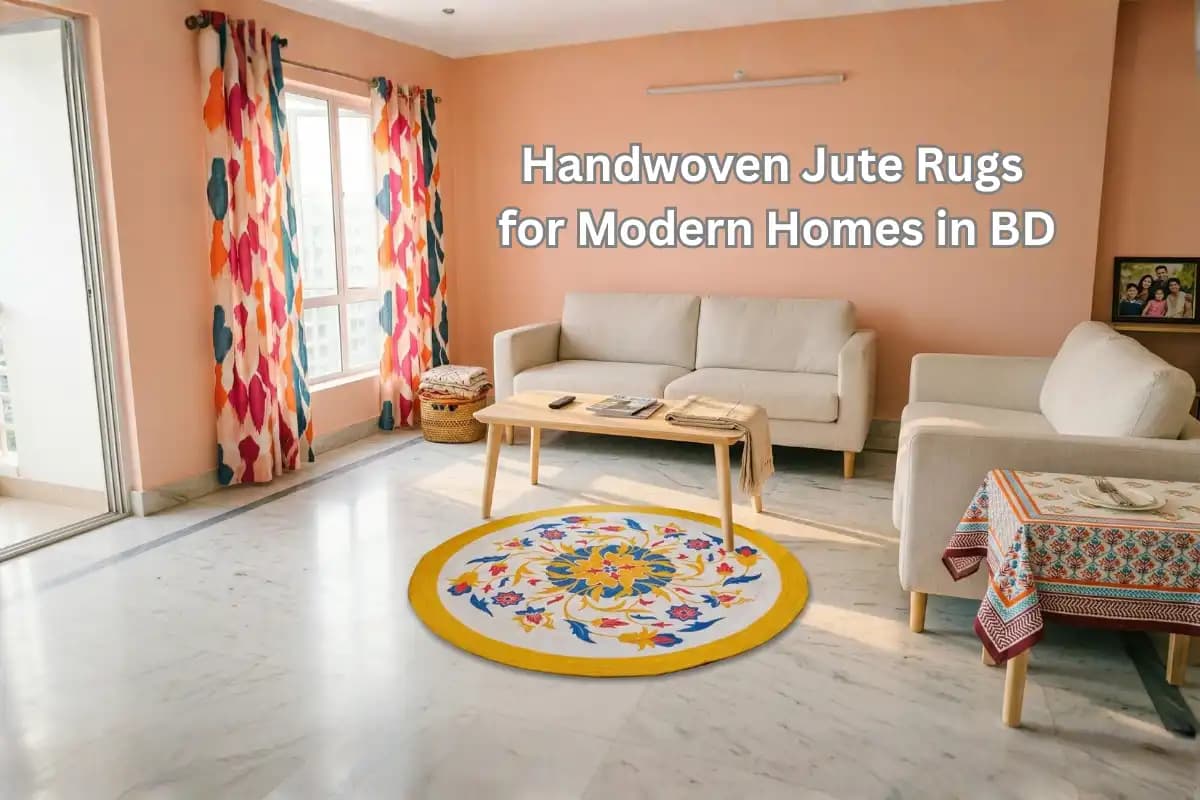
A handwoven jute rug that Bangladesh homeowners choose provides natural breathability, zero VOC emissions, and mold resistance that synthetic carpets cannot match. Jute fibers absorb humidity rather than trapping it, making these rugs well suited to Bangladesh's monsoon climate. Today, we cover climate performance, indoor air quality, durability, styling in small apartments, authentic craftsmanship, monsoon-proofing, care routines, and where to buy the best options in Dhaka.
A jute rug, which Bangladesh homeowners rely on, offers a floor covering that fundamentally cannot provide the open fiber structure that allows moisture vapor to pass through the weave rather than accumulating beneath it.
Jute resists humidity buildup because its hollow, cellulosic fibers absorb and release moisture vapor in equilibrium with the surrounding air, preventing the trapped condensation that can cause mold and mildew to develop in synthetic carpet backing during Bangladesh's rainy months.
Why Jute Rugs are the Superior Choice for the Bangladeshi Climate
Jute is better suited to Bangladesh's tropical climate than synthetic rugs because its fiber properties align with the country's high humidity and monsoon conditions.
The jute rug market in Bangladesh is growing precisely because homeowners are discovering what the textile industry has known for decades, that jute's hollow bast fiber structure regulates moisture rather than resisting it.
The Science of Jute's Climate Advantage
Breathability: Jute fibers are hollow at their cores, creating a network of microchannels that allow humid air to circulate through the rug surface rather than pooling beneath it.
Mold resistance: Because jute wicks moisture vapor away from the floor surface, it denies the stagnant moisture environment that mold spores require to colonize. Synthetic rug backing, by contrast, is non-porous and creates exactly that static moisture layer.
Natural antimicrobial behavior: The lignin content in jute fibers provides mild antibacterial properties, further reducing the risk of biological growth during the June through October monsoon window.
Thermal neutrality: Jute does not retain heat the way nylon or polypropylene does. In Dhaka's summers, when temperatures range from 35 to 40 degrees Celsius, walking on a jute rug feels noticeably cooler than on a synthetic pile.
One hectare of jute absorbs approximately 15 tons of CO2 annually, making a jute rug a net-positive ecological choice that also supports Bangladesh's agricultural economy.
How Natural Fibers Improve Indoor Air Quality in Dhaka
Natural fiber rugs like jute improve indoor air quality in Dhaka by eliminating volatile organic compound (VOC) off-gassing from synthetic rugs, which can persist for up to 5 years after manufacture.
Standard polyester rugs and polypropylene rugs are produced with petroleum-derived polymers, chemical flame retardants, and synthetic adhesives that continuously release VOCs into the room air.
According to the American Lung Association, reducing chemical exposure from floor coverings measurably improves respiratory health in enclosed spaces.
What Jute Does to Your Indoor Air
Zero VOC production: Untreated, undyed jute emits no synthetic compounds. In Dhaka, where apartments often have windows sealed by air conditioning units, the distinction is meaningful for family health.
Dust management: Jute's weave traps coarse dust particles on the surface, where a vacuum can remove them, rather than embedding allergens deep in a dense pile that recirculates when disturbed.
No synthetic backing risk: Many imported rugs use latex or chemical adhesive backing that off-gases formaldehyde. Choose a jute rug with a natural cotton or jute backing to eliminate this source entirely.
For families in Gulshan, Banani, or Dhanmondi apartments with limited outdoor air exchange, switching to a natural fiber area rug is one of the most accessible indoor air quality improvements available without renovation.
Durability and Safety: Is Jute Right for Homes with Kids and Pets?
Jute rugs are safe for homes with children because they are 100% natural, chemical-free, and non-toxic with no VOCs or synthetic treatments.
They are also hypoallergenic, as they introduce no artificial chemical allergens. The nuance lies in placement and maintenance rather than material safety.
Honest Durability Assessment
Expected lifespan: A quality handwoven jute rug in a low-to-medium traffic area lasts 3 to 5 years with routine care. Under a coffee table or in a bedroom, lifespan extends to 7 or more years.
With children: Jute is safe for play areas, but its coarse texture is firmer than cotton or wool. Use a soft cotton play mat over the jute base for toddler floor time.
With pets: Cats and dogs with active claws will fray jute fibers over time. Jute also absorbs pet urine and odors if spills are not treated within minutes. For pet-heavy rooms, consider a jute rug in lower-traffic zones.
Shedding: New jute rugs shed fiber for the first 4 to 6 weeks. Vacuum with low suction twice weekly during this period using a brush attachment without a beater bar.
Jute belongs in living rooms, dining areas, and bedrooms rather than entryways and kitchens. Correct placement is the primary durability variable.
Durability and Safety: Is Jute Right for Homes with Kids and Pets?
Jute rugs are safe for homes with children because they are 100% natural, chemical-free, and non-toxic with no VOCs or synthetic treatments.
They are also hypoallergenic, as they introduce no artificial chemical allergens. The nuance lies in placement and maintenance rather than material safety.
Honest Durability Assessment
Expected lifespan: A quality handwoven jute rug in a low-to-medium traffic area lasts 3 to 5 years with routine care. Under a coffee table or in a bedroom, lifespan extends to 7 or more years.
With children: Jute is safe for play areas, but its coarse texture is firmer than cotton or wool. Use a soft cotton play mat over the jute base for toddler floor time.
With pets: Cats and dogs with active claws will fray jute fibers over time. Jute also absorbs pet urine and odors if spills are not treated within minutes. For pet-heavy rooms, consider a jute rug in lower-traffic zones.
Shedding: New jute rugs shed fiber for the first 4 to 6 weeks. Vacuum with low suction twice weekly during this period using a brush attachment without a beater bar.
Jute belongs in living rooms, dining areas, and bedrooms rather than entryways and kitchens. Correct placement is the primary durability variable
Styling Jute Floor Decor in Small Apartments
Jute floor decor in small Dhaka apartments creates the visual illusion of expanded space when positioned according to precise placement rules.
Bangladesh interior designers recommend that anchors a seating or dining arrangement, drawing the eye to the furniture grouping rather than the room's perimeter walls.
This refocusing effect is one of the most reliable tricks for making compact floor plans feel larger.
Placement Rules That Make Small Rooms Look Larger
Coffee table rule: Place the rug so all four legs of the coffee table sit on it. If the sofa is nearby, allow the front two sofa legs to rest on the edge of the rug. It creates a unified zone that signals spaciousness.
Size up, not down: In small apartments, the most common mistake is choosing a rug that is too small. A 5x7-foot rug in a room that calls for a 6x9 rug makes the room feel fragmented and tight.
Consistent border: Maintain a 12 to 18-inch bare floor between the rug edge and the room's walls. The visible border frames the rug like a mat frames artwork, making both the rug and the room feel intentional.
Round rugs in dining nooks: A round natural fiber rug under a small round dining table, and table runners in a Dhaka apartment kitchen nook, mirror the table shape and make efficient use of a constrained floor area.
Browse jute rug prices in Bangladesh to find handwoven options sized specifically for standard Bangladeshi apartment layouts.
Authentic Bengali Craftsmanship in Modern Interiors
Bangladesh is the world's largest exporter of jute goods, and the handweaving traditions behind the quality jute rugs produced by Bangladesh artisans represent centuries of textile knowledge concentrated in communities across Narsingdi, Comilla, and Rajshahi.
Choosing a handwoven jute rug from a Bangladeshi artisan brand like Kaaruj does more than furnish a floor. It sustains a living craft economy and brings a genuine cultural product into your home.
How Traditional Weaving Translates to Modern Aesthetics
The braided weave: Traditional braided jute produces a tightly coiled spiral pattern that sits flat, resists edge curling, and adds rich dimensional texture to minimalist interiors.
The flat loom weave: Used for thinner area rugs and floor mats, flat weave jute suits contemporary Scandinavian or Japanese-inspired interior styles common among Dhaka's urban professional demographic.
Natural color palette: Undyed jute's golden brown tones pair naturally with terracotta, white, olive, and warm grey, which are the dominant interior colors in modern Bangladeshi home design.
Supporting women artisans: Many Bangladesh jute weaving cooperatives employ women from rural communities, making a purchase an act of direct economic support for marginalized producers.
For curated handwoven collections made in Bangladesh by local artisans, visit the best jute rug shop to explore designs that bridge traditional weaving with contemporary home styling.
Monsoon Proofing: Preventing Moisture Damage in Natural Rugs
Preventing moisture damage in a handwoven jute rug during Bangladesh's monsoon season requires proactive environmental management rather than reactive cleaning.
Jute's hollow fibers rapidly absorb liquid water and retain it, creating conditions for browning and mold if the rug does not dry fully within 24 hours. The solution is to control the rug's moisture environment, not avoid jute altogether.
Monsoon Season Rug Protection Protocol
Upgrade from cold tile: Use a breathable cotton or natural rubber rug pad between the jute and floor tiles. Cold tile surfaces condense moisture from warm air against the rug's underside during Bangladesh's humid monsoon months.
Run a dehumidifier: In rooms where the relative humidity exceeds 70%, a portable dehumidifier keeps ambient moisture below the threshold where jute absorbs water from the air rather than releasing it.
Rotate every 3 months: Rotating the rug ensures even UV and humidity exposure and prevents localized fiber degradation where one section consistently bears more moisture stress.
Dry within 24 hours: If a jute rug gets wet from rain entering through a window or a spill, lay it flat in indirect sunlight or in front of a fan. Do not fold a damp jute rug, as the compressed fibers will brown and weaken.
Seasonal storage: During the heaviest monsoon weeks in July and August, rolling and storing decorative jute pieces in a dry interior room extends their useful life by two to three years.
A properly managed jute rug in a Bangladeshi home is not a liability during the monsoon season. It is a manageable natural material that rewards attentive care with years of beauty and function.
Care and Maintenance for Long-Lasting Jute Rugs
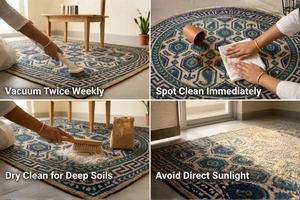
A jute rug that Bangladesh homeowners want to preserve needs a consistent maintenance routine aligned with its natural fiber behavior. Unlike synthetic rugs that tolerate machine washing, jute requires dry or low-moisture care throughout its life.
Vacuum twice weekly: Use low suction with a brush attachment. Never use a beater bar as it pulls and frays the jute's soft fibers.
Spot clean immediately: Blot liquid spills with a dry white cloth within seconds. Do not rub or saturate the spill area with water.
Dry clean for deep soils: Dry-cleaning methods with absorbent powder are the safest deep-cleaning option for naturally dyed or undyed jute.
Avoid direct sunlight: Long exposure to direct UV light bleaches jute fibers unevenly. Rotate the rug every season and use window treatments to manage afternoon sun.
Use a rug pad: A natural cotton or rubber rug pad under a jute area rug reduces friction shedding, adds cushioning, and improves air circulation underneath the rug.
The Art of Layering Rugs in Modern Decor
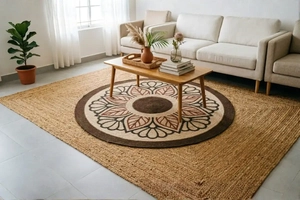
Layering a smaller patterned rug over a large jute base is a popular trend that adds depth and color to a neutral room.
You do not have to choose between a natural look and bright colors. Many designers in Bangladesh now use a large jute rug as a foundation.
They then place a smaller, colorful rug on top of it. It creates a rich and sophisticated look for your living room.
The jute provides the breathable base needed for the local climate. The top rug adds the personal style and color you want.
The following method is also very practical. It protects an expensive top rug from daily wear and tear. It works perfectly in large spaces where a single rug might look too small.
Supporting the Golden Fiber Legacy of Bangladesh
Buying a locally made jute rug helps preserve the historical importance of jute while increasing the modern green economy.
Jute is known as the Golden Fiber of Bangladesh for a good reason.
It has been the backbone of the local economy for generations. When you buy a handwoven rug, you keep this tradition alive. You are supporting local farmers and skilled weavers in your own country. It is much better than buying imported plastic rugs made from chemicals.
Local jute is often of a higher quality because it comes directly from the fields. It does not travel across the world in large shipping containers.
The factor reduces the total environmental impact of your home decor. It is a purchase you can feel proud of for many years.
Identifying Quality in a Handwoven Jute Rug
Recognizing high-quality jute involves checking the thickness of the braid and the consistency of the natural fiber color.
Not all jute rugs are created equal. A premium rug will have a consistent golden shimmer across the surface. It should feel heavy and stay flat on the floor without curling.
Check the edges to see if they are reinforced with strong stitching. Good quality jute should not have a strong chemical smell. Instead, it should have a mild and earthy scent.
Look closely at the weave's tightness. A tighter weave usually lasts longer and sheds less over time.
In Dhaka markets, you can find many options, but the best come from dedicated artisan shops like Kaaruj that focus on the fiber's strength and timeless elegance.
Conclusion
A jute rug, which Bangladesh homes are increasingly choosing, represents the rare category of home decor purchase in which aesthetic value, environmental responsibility, and climate-friendliness align completely.
Jute outperforms synthetic alternatives in terms of VOC safety, breathability, and ecological footprint.
It thrives in the living rooms and dining spaces of modern Dhaka apartments when sized correctly, placed thoughtfully, and protected from direct monsoon exposure.
Supporting local artisan brands that produce handwoven jute rugs also sustains a centuries-old Bangladeshi textile tradition that deserves recognition in modern interiors.
Explore current jute rug prices in Bangladesh and shop the full collection at Kaaruj to find the right size, weave, and style for your home.
Happy Shopping!
Frequently Asked Questions
Are jute rugs good for humid climates like Bangladesh?
Yes. Jute's hollow fiber structure allows moisture vapor to circulate, preventing mold buildup common with synthetic rugs in humid conditions.
How long do jute rugs last in Bangladesh?
3 to 5 years in medium-traffic areas and up to 7 years under furniture with proper monsoon-season care and routine vacuuming.
Can jute rugs be used in Dhaka apartments with marble floors?
Yes. Use a breathable cotton rug pad underneath to prevent condensation between the cold marble and the jute backing.
What size jute rug fits a standard Dhaka living room?
A 6x9-foot rug suits most standard Dhaka living rooms, anchoring the sofa and coffee table grouping while leaving 12 inches of floor visible at the edges.
Are jute rugs safe for babies and toddlers?
Yes, they are non-toxic and chemical-free. Layer a soft cotton play mat over the jute for comfortable toddler floor time.
How to clean a jute rug without water?
Use a vacuum with low suction and dry absorbent powder for deeper soils. Blot any liquid spills immediately with a dry cloth without saturating the fiber. Learn more about how to clean a jute rug without water from our helpful article.
Do jute rugs shed a lot?
Yes, initially. New jute rugs shed for the first 4 to 6 weeks. Vacuum twice weekly with a brush attachment to reduce shedding.